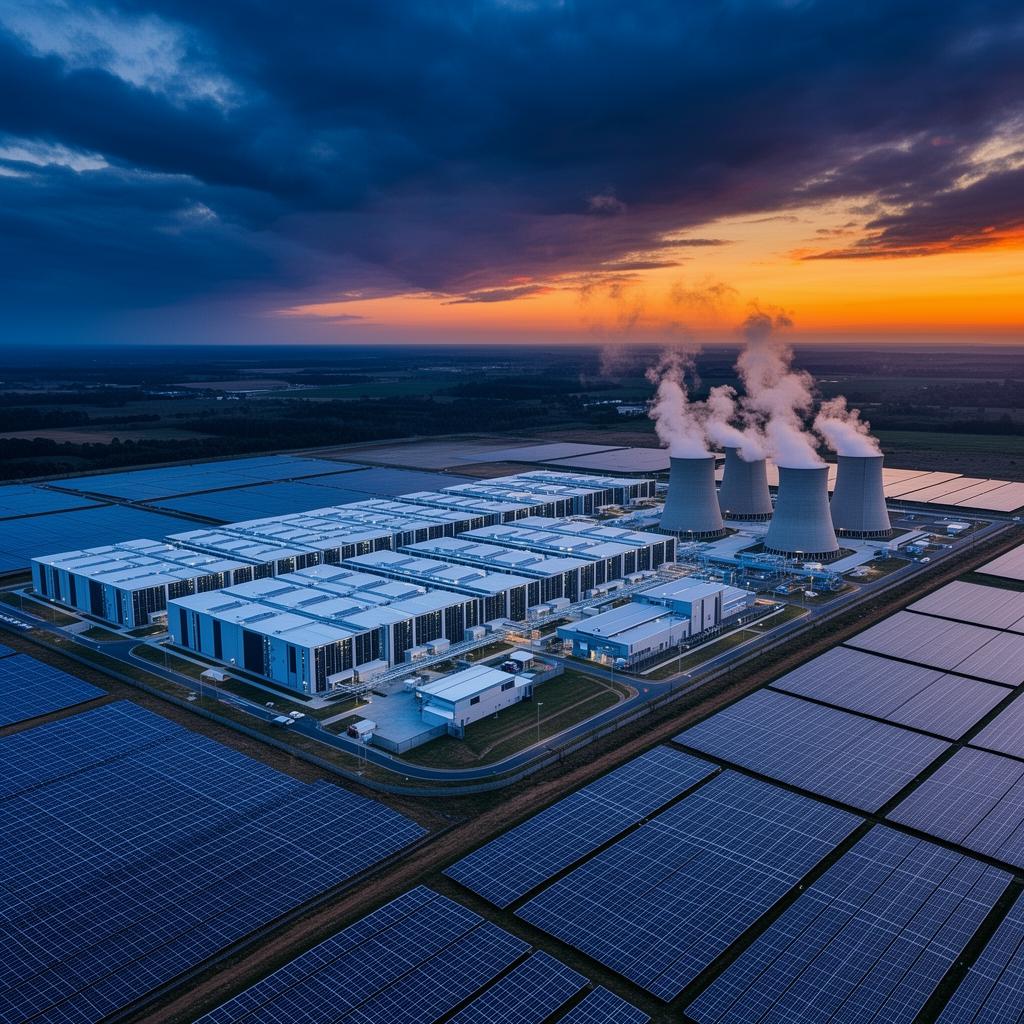
Data Center Demand Is Being Reshaped by AI Workloads
AI is not just changing software. It is changing the physical infrastructure underneath it. Data Center demand is accelerating, and most organisations are not ready for what that means.
The shift is structural, not cyclical
Data Center capacity has been growing steadily for two decades. Cloud adoption, SaaS proliferation, and digital transformation programmes drove consistent expansion.
AI changed the trajectory.
GPU-dense workloads require fundamentally different infrastructure. Power consumption per rack has increased dramatically. Cooling requirements have shifted from conventional air cooling to liquid and immersion systems. The facilities built for traditional cloud workloads are not designed for what AI demands.
According to the International Energy Agency (IEA), global data center electricity consumption is projected to double by 2026, driven largely by AI workloads. This is not a temporary spike. It is a structural shift in how infrastructure is planned, built, and operated.
Demand is outpacing supply
Gartner estimates that enterprise IT spending on cloud infrastructure will continue to accelerate through 2025 and beyond. New builds take 18 to 36 months. Permitting, power procurement, and supply chain constraints add further delays.
The result is a capacity gap that is widening, not closing.
McKinsey projects that global data center demand could reach 35 GW by 2030, up from approximately 17 GW in 2022. Hyperscalers are securing land and power agreements years in advance. Enterprise organisations without similar foresight are finding themselves locked out of prime locations and grid connections.
What this means for hiring
The talent pipeline has not kept pace with demand. The Uptime Institute has consistently reported that staffing shortages are one of the top operational risks facing data center operators. Roles that were already difficult to fill are now critical bottlenecks:
- Site Reliability Engineers who understand GPU cluster management
- Infrastructure Engineers with experience in high-density deployments
- DevOps Engineers who can manage hybrid on-premise and cloud environments
- Platform Engineers building internal tooling for AI/ML pipelines
- Electrical and Mechanical Engineers for facility design and operations
Generic recruiting processes do not work for these roles. The candidate pool is small. The competition is intense. Hiring timelines that stretch beyond four weeks result in lost candidates.
For further reading on infrastructure talent challenges, see this LinkedIn article by Strategizes on hiring for data center roles.
Pricing and commercial models are evolving
Traditional data center pricing was built around consistent, predictable workloads. Colocation contracts assumed steady power draw and stable rack densities.
AI workloads break these assumptions.
Power costs now represent a larger share of total operating expenditure. NVIDIA GPU infrastructure has become the standard for AI training, and the associated energy requirements have forced operators to rethink commercial models. Variable pricing models are emerging. Some operators are introducing GPU-as-a-service tiers. Others are restructuring contracts around power reservation rather than physical space.
Organisations that do not revisit their infrastructure pricing models will find margins under pressure as energy costs fluctuate and demand patterns shift.
Operational complexity is increasing
Running AI workloads at scale introduces operational challenges that most teams have not encountered:
- Thermal management across mixed-density environments
- Power redundancy for GPU clusters that cannot tolerate interruption
- Network fabric design optimised for east-west traffic patterns
- Storage architecture that handles both training datasets and inference workloads
- Monitoring and observability across heterogeneous hardware
These are not problems that can be solved with generic cloud migration playbooks. They require specialist knowledge and deliberate operational design. AWS, Azure, and Google Cloud each publish reference architectures, but implementation requires teams with hands-on experience.
The strategic implications
Organisations building AI capabilities need to think about infrastructure as a strategic asset, not a cost centre.
This means:
- Capacity planning that accounts for AI workload growth trajectories
- Hiring strategies that target infrastructure specialists before demand peaks
- Commercial models that align pricing with actual consumption patterns
- Operational frameworks that handle the complexity of mixed workloads
The organisations that treat infrastructure decisions as afterthoughts will find themselves constrained. The ones that plan deliberately will have a structural advantage.
Where we work
Strategizes operates at the intersection of infrastructure hiring, pricing strategy, and operational design.
We help organisations:
- Hire infrastructure engineers through specialist recruitment processes
- Review pricing and commercial models for data center operations
- Design operational frameworks for AI-ready infrastructure
Connect with us on LinkedIn for ongoing insights on infrastructure, pricing, and product strategy.
If your infrastructure strategy has not been updated for AI workloads, it is already behind.